Tuesday, May 27, 2014

Tales of Stingray and Kingfish continue w hook of data request

As many readers of this post know since September of last year I have been doing data requests and lobbying for a bill at the Minnesota Legislature that would give greater protections for Minnesotans when government entities want access to your personal and sensitive location data.  Well that bill passed and became law.

For me though, questions still remain about the usage of the Kingfish/Stingray and the recent disclosure that these devices have been used hundreds of times by the Bureau of Criminal Apprehension.  In effort to find out what was the rationale for its usage so many times I am continuing with data requests under our Minnesota Government Data Practice Act. (statute)

This is part of a recent data request I sent to the Minnesota Department of Public Safety which the Bureau is a division of.

"Pursuant to media coverage, the cellular exploitative devices known as the Kingfish/Stingray have been used hundreds of times over the past several years.  
I have reviewed approximately 20 cases that the devices were used specifically by the BCA for BCA cases that the agency was responsible for.  I have done this pursuant to previous data requests.

This appeared recently in the the newspaper, "Politics in Minnesota"

"Currently, the Hennepin County Sheriff’s Office and the state Bureau of Criminal Apprehension are the main agencies known to use such technology. The BCA uses it roughly 100 times a year, according to a spokeswoman."

What I am requesting per Chapter 13 is to inspect and review all government data that documents the usage of the cellular exploitative devices since 2008 with other agencies or entities.

In my discussion with......why the usage of cellular exploitative devices hundreds of times, but so few inactive criminal investigative files held by the BCA to document the usage.  ......indicated that BCA will act many times in a supportive role in the use of exploitative cellular devices, therefore no case file because "it's" not their case.

But I do believe there must be documentation when an device such as the Kingfish/Stingray is used in a supportive role as described to me by........

I want under Chapter 13 to review and inspect all government data that documents the usage of the cellular exploitative devices (Kingfish/Stingray) since 2008 with other agencies or entities."

I left out the name of the person I spoke with.  But what you see here is an example of using a statutory/law for accountability and to bring sunshine to an issue that continues to be of interest to many people.

I will keep you posted.

Sunday, May 11, 2014

Will Legislature keep HMO data secret, even while industry is under federal investigation?

This session, the Minnesota Legislature has been debating bills brought forward by the Minnesota Newspaper Association to fix the Supreme Court's / Timberjay decision.  The bills (SF 1770/HF 2167) would make sure that all private companies that contract to perform outsourced government work would be subject to Minnesota's open records/privacy law, the Data Practices Act.

No one objected to the bill until the Minnesota Council of Health Plans came forward, and said the world would end unless they were exempted from the Data Practices Act.  But the proposal has become entangled with a behind the scenes/closed door discussion in secrecy from the offices of the Minnesota Department of Human Services to the leadership of the Legislature.  Last week the Minnesota Senate voted unanimously to give the the Health plans what they demanded.

Here is a question for our lawmakers:  Why would you provide total exemption from our open records law to an industry that is currently under investigation for the misuse of billions of taxpayers dollars?

That's essentially what happened on Friday, when the Senate added an amendment to SF 1770 that gave a blanket exemption to the entire HMO industry, for one year.  HMOs contract with the State to provide public program health care services.  For at least a year or more, the federal government has been investigating these programs, and the role the HMOs play in handing them, due to many charges of mismanagement.  That is reason enough make sure that the public can really see what is going on inside the HMOs, and how they spend taxpayer funds.

I know that the Newspaper Association wanted the bill to correct the Timberjay case. But at what price? What makes these HMOs so special?  If the point of HF 2167/SF 1770 is to make sure that there is public oversight of outsourced spending, why exempt an industry that gets a huge share (hundreds of millions) of that spending?

Some will say that it's only a one year exemption and that there is going to be a study. Our use of HMOs for the management of public programs was only supposed to be a short "demonstration project" and there was going to be a study. The demonstration project has been going on for more nearly 25 years and a 1993 study was shelved after opposition from the HMOs (as the Star Tribune reported at the time on March 13, 1994/Human Services HMO study-shelved).  Once it's written into law, will the blanket HMO exemption also be rolled forward forever?

Now that the HMOs have succeeded in insulating themselves from public review in the Senate, it appears the House will follow suit on Monday with  amendments offered to placate their demands.  It seems strange that after an April 25th hearing of Joint House Committees{ HHS-Finance/Policy/Civil) that Minnesota House members felt there was no justification for a blanket exemption and now it seems they changed their minds.  What happened?   Will House members stand up to demand real transparency and accountability or will they sell out?

Related Post:
http://opensecretsmn.blogspot.com/2014/04/minn-health-plans-strangling.html

Thursday, May 8, 2014

Trials and tribulations at the Legislature

I have been at the Minnesota Legislature for a long time influencing public policy.  I have been guided by my viewpoint what I think is important for civil liberties, privacy, and open government.  But life as a concerned citizen has not always been a bed of roses.  My satisfaction of getting laws and initiatives passed with which I have had a hand in has been quite satisfying.  Many of my actions for or against legislation will never affect me, but I know it will with others.  But the trial and tribulation one goes through is another story.

This year I have been called "sinister", questioned several times why I have an interest in pieces of legislation because I should not have an interest in, according to others; shouted in an angry way by the head of association because of a tweet I did promoting my take on a bill.  Even by a new director of an association a view I took on LPR legislation via twitter.  He did not like my tweet stated it was untrue.  I felt like saying in reply your background in public relations/media and what the hell do you know about license plate readers and the impact of them on people's rights and liberties.  Basically I wanted to say I know helluva lot more about it then you do.  But I was polite and just chalked it up as.........

But this is not new, as someone who has gained knowledge about the "dance of the legislators", gained awareness and mastery of privacy and open government from others, experience, and reading, I have knowledge and information to share with legislators.

And sometimes entrenched special interests, lobbyists, and even legislators get mad, teed of, and even damn in your face about it because I am an unpaid person who may sometimes upset their applecart to improve, modify or impinge, or eat their apples(legislation/proposal).

When I first started hanging around the legislature in the late seventies I was a person who took an interest in a bill or two, known a bit to testify once in a while, but mostly hung out, observing.  Gained insight to the dance of the legislators, by working with such people as Senators Randy Peterson and Gene Merriam. Who helped develop my astuteness of privacy was coming in contact with Don Gemberling in 1979 when I had a question about wanting to get access to my private data held by a government agency.

So I was on my way learning, observing, remembering, going to the law libraries to research legislation and court cases and by the early 80's had some knowledge. By the mid 80's I was being asked why are you doing this and who are you by others who hung around the Capitol because more than likely I was beginning to make a difference.

As time went on the trials and tribulations started, many I remember well.  My all time classic is by a top law official who snidely in his own humorous way stated basically we should have set you up in a bad situation and share it with legislators.  In other words, I was a stumbling block is his attempts to get legislation passed the way the agency wanted.  I shared with Senators what I thought the bill did and they had a special hearing on it.  The bill was passed, but a sunset was put on it for a year.  Policymakers and I came back the next session with measures to protect our privacy with accountability.

Another one is is the legislator who confronted me about pulling the "race card".  I was startled.  He had legislation that could have had in my judgement a disparate impact on community of colors.  I called the Council on Black Minnesotans about the bill who organized people and organizations to oppose aspects of it.  As I have stated before in previous posts many people sometimes do not know whats go on in the People's House.  I try to let them know.

I was asked by a legislator why I "shitcan" his bills. I said they were bad bills.  One I laughed at when an elected official did in public was when I came to a hearing and he knew I was going to testify against his bill, he would say......"Your mother is calling you".  Indirectly, saying leave my bill alone and leave the hearing room.

A recent one is the legislator who said I am not interested to listen what you have to say because you represent no one.  "You represent no group or organization, you are not my constituent" I said fine.  I think he was teed at me for the issues I raised about his bill which eventually did not become law the previous year.

I have learned the dance of the legislators well.  Bills that I see that are not good or good for privacy and open government sometimes I go to leadership, no matter what party, and share with them benefits, implications, traps, and pitfalls of a bill.  And going to the Chairs of Committees explaining in detail why a bill good is bad or good.  It is all part of the inside process I have learned.

But in the last analysis, this a place of human behavior and relationships.  I have apologized to a legislator or two over the years.  But the difference between the great many people who influence policy here at the Capitol and myself is that they are paid and are here full time and have have vast resources.  When they get the difficulty and anxiety about the legislative process they see it and feel it in a different way then I do.

I come with a tenacity, persistence, good information, and a passion for what I believe in, but it can be and is tiring.  Thanks to the great majority of legislators who are willing to listen to the public and me over the years.

By the way the person who called me "sinister" shook my hand yesterday maybe I am not so bad after all.

Monday, April 28, 2014

Why cops nixing 4th Amendment protections at Legislature

In a conference committee technology and privacy rights, will be tangling soon if a bill passes in the Minnesota House on Tuesday.  The debate is centering on three areas: authority of law enforcement to obtain and use records from cellphone towers without a search warrant, ability to reel in a troves of user data collected on innocent people as well as a target when government uses such surveillance devices as Kingfish, Amberjack, Fishawk, Porpoise and Stingray without a search warrant, and whether the search by government of your cell phone location data is a "search and seizure" under the 4th Amendment.

The House bill has a probable cause court order standard not a "search warrant based on probable cause" which is a big difference for the protection of Minnesotans privacy and liberties.  The search warrant requirement passed in two House committees, but not in a third.

In just the use of the Stingray/Kingfish law enforcement authorities has tapped and used it over 600 times plus in the last several years.  Law enforcement agencies do "cell phone tower" dumps where they collect tower location records on innocent people along with the targeted individual. Using such surveillance devices as Stingray, activities with "tower dumps", and getting easy access to your cell/smart phone record by government shoveling up cellphone communications across a broad spectrum of Minnesotans, there should be Fourth Amendment statutory protections, a search warrant

The law now allows law enforcement to tell a judge the cellphone information is relevant to their criminal investigation for a court order.  It is important to have a stricter and higher legal standard, with government required to show probable cause that a crime was or is being committed and obtain a search warrant.  But to obtain the search warrant is what Minnesota law enforcement lobbyists and authorities do not want.

Law enforcement has argued no need for search warrant and does not want it even mentioned in the bill because they do not believe it is a "search" or breach of a "reasonable expectation of privacy"  I on the other hand do believe that Minnesotans through their elected officials are prepared to recognize a expectation of privacy in their location that mandates government obtains a search warrant.  When I ask law enforcement officials and lobbyists, why it not an invasion of of privacy under the 4th Amendment and why a search warrant should not be used to track and collect cell/smart phone location.  I am basically told there is no expectation of privacy, the data and records are held in third parties, and there is no need for a 4th Amendment search warrant.

With disclosure several months ago that the Bureau of Criminal Apprehension spent more than $600,000 of general fund monies on the Stingray/Kingfish, there has been a heightened scrutiny on the use of this technology.  I have done several data requests which I have reviewed , but also have been denied.

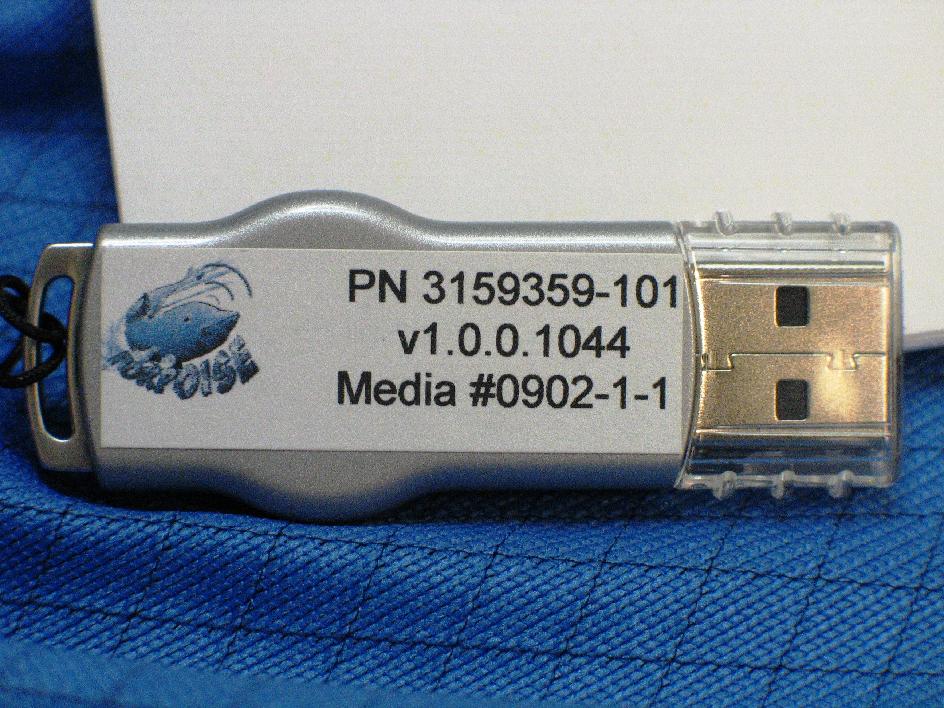
The Bureau has denied they do real time interception of phone conversations and text messages. But their honesty and openness on this overall topic has not been strictly open and direct with policymakers and the public.  In a published story, Harris Corporation does have equipment which allows for interception of phone conversations and text messages which they also promote. "Procurement documents indicate that the Stingray can also be used with software called“FishHawk,” (PDF) which boosts the device’s capabilities by allowing authorities to eavesdrop on conversations. Other similar Harris software includes “Porpoise,” which is sold on a USB drive and is designed to be installed on a laptop and used in conjunction with transceivers—possibly including the Stingray—for surveillance of text message."  (Meet the machines that steal your phone's data)

As some of you may know who may read recent posts, the Stingray is a device that is very portable  which emits signals to where your smart phones may be while you are in your home or going down the street and pairs up with the digital signals of your personal smart/cell phone.  And by magic the revelation of where you are is gotten by law enforcement.  But a negative that happens also is that innocent and law abiding individuals data is inhaled and the people do not know that.

So why is law enforcement particularly BCA so adamant about not having to get a search warrant to use the Stingray and get access to Minnesotans cell phone location?

(1) Law enforcement does not believe that Minnesotans should have the highest protection of the privacy from our Federal and State Constitutions, need for a search warrant under the 4th Amendment when they want access to your cell phone records or when surveillance is done on you in real time with such devices as Stingray.

(2) Law enforcement believes you have no expectation of privacy guaranteed by the 4th Amendment when records are held about your movements and associations by third parties such as Verizon and other communication carriers through the use of you cell/smart phone.

(3) Law enforcement does not want well-established body of case law that deals with search warrant and protects Minnesotans from intrusive behavior that compromises our liberty and privacy.

(4) Law enforcement wants to shield information about new technologies being used for surveillance purposes, therefore no search warrant.  As a recent Appeals Court in Florida found out.  Law enforcement "did not want to obtain a search warrant because they did not want to reveal information about the technology they used to track the cell phone signal."

(5) Law enforcement by having to do a search warrant must give to the independent judge specifics and particularities about "search and seizure" and how it interacts with privacy rights guaranteed by the Fourth Amendment.  In the context of cell phone surveillance, it would mean the particular cell phone they are following and shadowing and what information they want.  Not having specifics can be a difference between doing real time surveillance of a smart phone's location and trailing a phone's location for any time period.

A search warrant requirement is much more than just inserting the words probable cause.  A search warrant requires specificity and also allows a judge greater authority to supervise the execution of the warrant.  This is particularly important when law enforcement uses the Stingray/Kingfish and real time surveillance of individuals.  The use of technology and "tower dumps" allows for collection of innocent people's communication and location data.

For those concerned about what Minnesota law enforcement and other agencies might do with the data that your personal device in your pocket produces without Fourth Amendment protections, just think of the places you go to----the data can reveal an individuals associations and politics or as Justice Sotomayor stated people do not "expect that their movements will be recorded and aggregated in a manner that enables the Government to ascertain, more or less at will, their political and religious beliefs, sexual habits, and so on."

Minor differences of a court order based on probable cause with no mention of stating it is a search warrant in statute can be minor but can be constitutionally significant and also compromise an individuals Fourth Amendment privacy and liberty interests.

MINN LEG UPDATE #1 Open Secrets 2014

Over the next three weeks as the Minnesota Legislature heads to an end there are a number of bills going forward that will have great impact on your privacy and civil liberties.  It is my intention to let you know about them so you can make a difference with your elected officials.  It is important that with knowledge you can ask the questions and state your position with them.

It is my intention to actively use this blog with posts to do just that inform you what is happening with various bills that have an impact on our rights......It will be from an informed perspective.  I have been lobbying on these issues as some of you may know for decades you may disagree with some of my takes or you may agree, but be aware it is based on information, knowledge, and experience.

I intend to entitle these posts as "MINN LEG UPDATE #1......... and so forth.  I will do these with what is happening in real time or near it as I can can possibly do.  I will also be tweeting on these matters @richneumeister.

Tomorrow there will be a vote in the Minnesota House on the issue of cell phone location.  The crux of the issue is whether or not a search warrant should be used.  Two House committees passed it with "search warrants", but on the final stop it was taken out.  Modifications needed to happen for the bill to progress.  As I stated before in the Committee process I prefer a search warrant.
 
Law enforcement has argued no need for search warrant and does not want it even mentioned in the bill because they do not believe it is a "search" or breach of a "reasonable expectation of privacy"  I on the other hand do believe that Minnesotans through their elected officials are prepared to recognize a expectation of privacy in their location that mandates government obtains a search warrant.

The bill is HF2288

I will be doing a more comprehensive regular post on this tonight.


Thursday, April 24, 2014

Minn health plans strangling transparency bill

As the legislative session is set to end in less than four weeks a little bill with token opposition is slowly being strangled by the biggest of all lobbying octopuses, Minnesota Council of Health Plans and their members.

The bill's purpose was to overturn a Minnesota Supreme Court decision that made it hard for the ability of government to guarantee privacy protection and access to public data with private parties that do business on the government's behalf.  Government does a lot of business with private parties from social programs to economic development studies on the government's behalf.  The Minnesota Government Data Practices Act was amended some 15 years ago to say that if a private party has contract with government to do a government function they come under the Act.

As the bill passed very easily in both Senate and House Committees and waiting on the floors of each body to pass.  The plans have secretly been lobbying behind closed doors to have data that is now currently public to be secret.  Depending on what legislator, lobbyist, or person involved with the bill it is hard get an idea what they are trying to do.

It is like Kabuki theatre (is a classical Japanese dance-drama. Kabuki theatre is known for the stylization of its drama and for the elaborate make-up worn by some of its performers.) at the Legislature on this issue.  There have been three proposals so far to try to deal with the health plans concerns.  One proposal was amended to the bill, SF 1770.

The language was added based on discussion with the Minnesota Department of Human Services, the IPAD division of the Department of Administration, Minnesota Newspaper Association, and Minnesota Council of Health Plans.  The language added is this: "governing access to and classification of the data." What the language does is negate numerous statutory privacy rights of individuals who have data with private agencies because they are involved with a government program under contract.  The private entity has data about individuals which they may administer.  For example, a chemical dependency program.

Yesterday the companion to SF 1770, HF 2167 was on the House calendar, but was mysteriously pulled off the docket.  Before being pulled it had two proposed amendments listed to possibly be placed on the bill.  Both amendments would have placed huge holes for transparency and accountability of private parties who have have government contracts.

Now all of a sudden a hearing is scheduled for tomorrow afternoon which is very unusual in the late game of the legislative session.  It is happening because of the power of the health plan octopus and its tentacles and because they want data that is now public to become secret.

The House Civil Law Committee will be meeting jointly with the Health and Human Services Policy and Health and Human Services Finance Committees on Friday, April 25 to discuss HF 2167. The hearing is scheduled for 3:00 PM or 30 minutes after the House floor session in Room 200 of the State Office Building.

Will the backroom machinations in the age of transparency kill a good bill?

Wednesday, April 16, 2014

LPR issue coming to head at Legislature

A license plate reader (LPR) that many Minnesota law enforcement agencies have and the data it collects can know where you were five days, five weeks, five months, even 5 years ago.  The data the LPR collects and disseminates can be used to get an individuals daily routine down pat.  Just review the Star Tribune articles about former Mayor R.T. Rybak and reporter Eric Roper.

The emerging technology, which can read 1,800 license plates per minute from a device mounted on a dashboard, roof, or fixed on a bridge as is being done in past or now on the Minneapolis Broadway Bridge is a tech-tool for crime fighting.

Usage of LPR's raises issues of civil rights, civil liberties, privacy, and accountability.  This debate has played out on the floors of the Minnesota Legislature in debate, but is coming to a Conference Committee soon.  Both legislative bodies, the House and the Senate, have passed their versions of the bill that's attempting to regulate the use of this vacuum cleaner of data.

The House position by a strong floor vote is very clear, any database of data that is used to keep tabs on innocent people's movements for any time is a no, no.  On the other hand, the Senate bill has a 90 day retention period for LPR scans on innocent people, but can be easily undermined by police stating we may need it for a criminal investigation.  The discretion in the bill allows for an agency to keep all scans forever.

Minnesota law enforcement believes tracking innocent peoples license plate data and whereabouts and storing the data is important to fight crime.  These databases whether in the local police department or stored in a central repository can reconstruct an individuals movements and creates an environment after the fact surveillance of innocent people without a warrant.

In the past several years, law enforcement agencies in Minnesota collected millions of license plate records through LPR's.  For example, in Minneapolis in 2011 of the 3,750,877 license plate data collected only 0.68 percent (25,543) were hits, meaning associated with a a possible crime, or whatever the local agency is using as a standard (persons of interest, stolen cars, stolen plates, scofflaws, ie).  Many of the hits are associated with such offenses as cancelled insurance or revoked driver's license.  In 2013, I went to the Bloomington Police Department and Minneapolis Police Department and per data requests got samples of time periods of scans and hits which included tens of thousands of scans.  The same pattern continued.  The percentage for hits was nearly half a percent.  St Paul Police in 2012 had 2,549,777 LPR scans with 1,104 hits.

For millions of license plate scans in Minnesota, very few are associated with serious crimes including stolen vehicles for which the original purpose of LPR's were supposed to be used for. The rest of the hits are for non-violent violations.

Key issue of the LPR debate at the Legislature:  The 99 percent of people scanned by Minnesota's LPR cameras are innocent and law-abiding Minnesotans. What should the restrictions be and how long should law enforcement be able to retain scans that are not hits and collected on innocent people?

There's no laws in place to deal with this new technology.  Law enforcement argues there is no right to privacy and that there should not be too much regulation. Law enforcement officials stated in testimony that Minnesotans do not have an expectation of privacy of where their car goes, what can be seen in public is public.

But what's different is that records collected and disseminated about the locations of where a vehicle has been spotted creates privacy interests to when law enforcement uses such tools for surveillance purposes and do collection of movements of law abiding and innocent people.  It has been documented that license plate readers have been used to monitor mosques, political rallies in Virginia, and recently an air show in Florida.  In conversations with Minnesota law enforcement officials I have not been told that license plate readers will NOT be used to monitor and do surveillance of public events. 

For anyone that has seen the first Godfather movie, they remember the scene of FBI agents jotting down license plate numbers of the guests and the celebrants who are at the Corleone compound.  Should this happen in the modern day at public events, political rallies, or at the Minnesota State Fair entrances with the use of LPR's?

Will hundreds of thousands of Minnesotans vehicle license plates (individuals) be recorded, stamped with location and time, and disseminated to various local, state, and federal law enforcement and agencies and be retained indefinitely?

There are Homeland Security federal grants and state funded monies through the Minnesota Department of Commerce to purchase LPR's.  Many law enforcement agencies are waiting to decide whether or not to get LPR's until the Legislature decides on the proposed bills.  Should we have a statewide network of license plate readers, a mass surveillance network?

Let your legislators know what you think.  If you don't who will.

Below is a link of posts I have done in the past on license plate readers.
http://opensecretsmn.blogspot.com/search?q=license+plate+readers