Showing posts sorted by date for query bca requests. Sort by relevance Show all posts

Saturday, December 6, 2014

Minnesota BCA gets "F" for chicanery on Stingray

Anyone who involves themselves in the study of government knows an endearing principle of it.  There must be trust between it (government) and the people or individual.  Many of us strive for that on the local, state, and Federal level.  But when the Bureau of Criminal Apprehension does the kind of behavior exposed by the Star Tribune today which is dark and noxious, the public and Legislature need to step in and ask questions and get answers.

If one reviews the record of the Star Tribune's and my interactions with the Department of Public Safety (DPS) and the Bureau of Criminal Apprehension (Division within DPS) in using the Minnesota Government Data Practices Act over the past 15 months to get access to documents such as the contract between the Harris Corporation and DPS, it is indisputable, the tricks and antics the Department of Public Safety did to stifle access to public information.  This is shameful and does not stand to what sound and open government is all about.

First, if one looks closely at the date of the contract the BCA dumped on late Friday afternoon you will notice the contract with the Harris Corporation is dated August 18, 2014.  "On June 18, 2014, Star Tribune reporter James Shiffer emailed DPS Commissioner Ramona Dohman, requesting access to (1) the Department's contracts related to "Stingray II" and "Kingfish" cellular exploitation equipment and (2) non-disclosure agreements ("NDAs") related to that equipment."  Mr. Shiffer did not get the contract or contracts dated previously to June 18, 2014.  Why?  Where are the old contracts?

Another example, in response to my requests to review and inspect Stingray and Kingfish contract data which I had done 3 times since September of last year. I got this from the BCA, dated February 14, 2014:

"we explained that the data is considered both deliberative process data under Minn. Stat. §13.82, Subd. 25 as disclosure would reveal information regarding investigative techniques that would compromise ongoing and future criminal investigations.  In addition, we previously noted that the data was also trade secret information pursuant to Minn. Stat. §13.37, Subd. 1(b). We continue to classify this contract under these two statutes and the contract cannot be released as such."

With Mr. Shiffer, they use the same identical arguments in an email sent to him by Bruce Gordon, spokesperson for the Department of Public Safety to deny him the contract and non-disclosure agreement.

When one assesses the contract it is very clear that the whole document is neither a trade secret nor information that would compromise on-going and future criminal investigations.

To further the point of BCA's misguided behavior, when the Star Tribune asked the Commissioner of Administration to rule on the Department of Public Safety's (BCA) behavior, the Department argued that the:

"The documents were withheld in their entirety due to the fact that heavy redaction of the documents was so intertwined with the public data that we were unable to separate the public from the protected data in a meaningful manner."

What kind of babble and mumbo jumbo is this from the leaders of the Department of Public Safety and BCA?  When one reviews both documents, the FBI/BCA agreement and Harris Corporation contract, one cannot take this argument seriously.

When one evaluates the entire process of the Star Tribune's and my experience in trying to get public data from the BCA on this matter it is pure "mental stress or discomfort experienced" by BCA and DPS "who holds two or more contradictory beliefs, ideas, or values." (cognitive dissonance).  The issue is to what beliefs, ideas, or values are the people who head the agency and the division (BCA) to hold.  Their own or the public's.

The FBI agreement raises a number of issues and questions to be asked specifically of the appropriate people in an open hearing held by the suitable committees of the Minnesota Legislature.  Is the signing of the agreement by the BCA a violation of state law?  Forwarding information on a legal request for public information to the federal government?  Are there situations where defendants Fourth Amendment rights or innocent Minnesotans privacy or liberties been compromised as it appears has happened in other states with such devices as the Stingray?  Have individuals been mislead because of the FBI/BCA agreement?

This section of the FBI agreement is troubling among others:


The Bureau of Criminal Apprehension and Department of Public Safety's conduct and actions need scrutiny in an open and public hearing.  To make them accountable for the behavior they have exhibited in efforts to suffocate elected public officials, the Minnesota Legislature, and public inquiries how a law enforcement agency spends public $$$ on tools that compromises our liberty and privacy.

 
NOTE:

Below are links to documents the reader of this post may have an interest in:

The Department of Public Safety's response to Commissioner of Administration on Star Tribune's request for an opinion:    https://drive.google.com/file/d/0B_OkFLQ9BEd0NE5zS1hrZUhIby1EaUV1Q0tDOGNWNDFXdzRj/view?usp=sharing

The Star Tribune's request for the Commissioner of Administration to issue an opinion to make BCA release requested documents:  https://drive.google.com/file/d/0B_OkFLQ9BEd0ZXdYblBsUTBKMlpqX2NXRHQybWtuLU9EbTI0/view?usp=sharing

The BCA documents with the Harris Corporation and the FBI:
http://stmedia.startribune.com/documents/BCA+Cellular+Exploitation+Equipment.pdf

Monday, June 9, 2014

Cell phone spy devices used multitude of times, but no documentation

Since last September with my first data request to the Bureau of Criminal Apprehension, I have been finding out more and more how the agency has been very secretive to keep from the public and policymakers information.  Information that the public and policymakers have a right to have.

What we Minnesotan's have found out since last last fall is that the Bureau since 2005 has spent hundreds of thousands of public dollars on devices that can locate and pinpoint individuals very precisely.  Through data requests and the media we have found out that these devices have been used hundreds of times by the Bureau and local law enforcement agencies.  These devices have also collected data on innocent people who may be in the area of the suspect that law enforcement targets.

I went through hundreds of pages of the Bureau's inactive criminal investigative files where the Kingfish/Stingray has been used.  I leave after reviewing the files a feeling the Bureau makes it an utmost priority to leave as little as one can any mention of these devices.

Even though the Bureau continues in its realm of secrecy on the spy cell devices, they responded to a request I made a couple of weeks ago.

The data request was based on the following facts.  The Bureau uses the Stingray/Kingfish for their investigative purposes.  Per the BCA inactive criminal investigations I reviewed the devices were only used a handful of times.  On the other hand, the Bureau borrows/arranges for its use to other law enforcement agencies.  The devices are used "roughly" 100 times a year per their spokesperson. (April 23, 2014-----"Senate passes phone surveillance bill" Politics in Minnesota)

I asked for documentation in the borrowing/arranging behavior in the use of the Bureau's Stingray/Kingfish by other Minnesota law enforcement agencies. The use of these devices by other agencies in the "surveillance" of  Minnesotans in my estimation is several hundred times since 2008. What I got in response from the Bureau last week was this:

"Mr. Neumeister,

I am writing to follow-upon this request. 

The information you reference is an estimation based on the current number of times we believe we have used this equipment and not a firm or exact number.  We have no documentation regarding the times we have utilized our cellular exploitation equipment for an outside agency.

Thus, we have no further data responsive to your request at this time. 

Based on the increased level of interest in this technology we are in currently assessing how we document the use of this technology in future cases." 
 

Tuesday, May 27, 2014

Tales of Stingray and Kingfish continue w hook of data request

As many readers of this post know since September of last year I have been doing data requests and lobbying for a bill at the Minnesota Legislature that would give greater protections for Minnesotans when government entities want access to your personal and sensitive location data.  Well that bill passed and became law.

For me though, questions still remain about the usage of the Kingfish/Stingray and the recent disclosure that these devices have been used hundreds of times by the Bureau of Criminal Apprehension.  In effort to find out what was the rationale for its usage so many times I am continuing with data requests under our Minnesota Government Data Practice Act. (statute)

This is part of a recent data request I sent to the Minnesota Department of Public Safety which the Bureau is a division of.

"Pursuant to media coverage, the cellular exploitative devices known as the Kingfish/Stingray have been used hundreds of times over the past several years.  
I have reviewed approximately 20 cases that the devices were used specifically by the BCA for BCA cases that the agency was responsible for.  I have done this pursuant to previous data requests.

This appeared recently in the the newspaper, "Politics in Minnesota"

"Currently, the Hennepin County Sheriff’s Office and the state Bureau of Criminal Apprehension are the main agencies known to use such technology. The BCA uses it roughly 100 times a year, according to a spokeswoman."

What I am requesting per Chapter 13 is to inspect and review all government data that documents the usage of the cellular exploitative devices since 2008 with other agencies or entities.

In my discussion with......why the usage of cellular exploitative devices hundreds of times, but so few inactive criminal investigative files held by the BCA to document the usage.  ......indicated that BCA will act many times in a supportive role in the use of exploitative cellular devices, therefore no case file because "it's" not their case.

But I do believe there must be documentation when an device such as the Kingfish/Stingray is used in a supportive role as described to me by........

I want under Chapter 13 to review and inspect all government data that documents the usage of the cellular exploitative devices (Kingfish/Stingray) since 2008 with other agencies or entities."

I left out the name of the person I spoke with.  But what you see here is an example of using a statutory/law for accountability and to bring sunshine to an issue that continues to be of interest to many people.

I will keep you posted.

Monday, April 28, 2014

Why cops nixing 4th Amendment protections at Legislature

In a conference committee technology and privacy rights, will be tangling soon if a bill passes in the Minnesota House on Tuesday.  The debate is centering on three areas: authority of law enforcement to obtain and use records from cellphone towers without a search warrant, ability to reel in a troves of user data collected on innocent people as well as a target when government uses such surveillance devices as Kingfish, Amberjack, Fishawk, Porpoise and Stingray without a search warrant, and whether the search by government of your cell phone location data is a "search and seizure" under the 4th Amendment.

The House bill has a probable cause court order standard not a "search warrant based on probable cause" which is a big difference for the protection of Minnesotans privacy and liberties.  The search warrant requirement passed in two House committees, but not in a third.

In just the use of the Stingray/Kingfish law enforcement authorities has tapped and used it over 600 times plus in the last several years.  Law enforcement agencies do "cell phone tower" dumps where they collect tower location records on innocent people along with the targeted individual. Using such surveillance devices as Stingray, activities with "tower dumps", and getting easy access to your cell/smart phone record by government shoveling up cellphone communications across a broad spectrum of Minnesotans, there should be Fourth Amendment statutory protections, a search warrant

The law now allows law enforcement to tell a judge the cellphone information is relevant to their criminal investigation for a court order.  It is important to have a stricter and higher legal standard, with government required to show probable cause that a crime was or is being committed and obtain a search warrant.  But to obtain the search warrant is what Minnesota law enforcement lobbyists and authorities do not want.

Law enforcement has argued no need for search warrant and does not want it even mentioned in the bill because they do not believe it is a "search" or breach of a "reasonable expectation of privacy"  I on the other hand do believe that Minnesotans through their elected officials are prepared to recognize a expectation of privacy in their location that mandates government obtains a search warrant.  When I ask law enforcement officials and lobbyists, why it not an invasion of of privacy under the 4th Amendment and why a search warrant should not be used to track and collect cell/smart phone location.  I am basically told there is no expectation of privacy, the data and records are held in third parties, and there is no need for a 4th Amendment search warrant.

With disclosure several months ago that the Bureau of Criminal Apprehension spent more than $600,000 of general fund monies on the Stingray/Kingfish, there has been a heightened scrutiny on the use of this technology.  I have done several data requests which I have reviewed , but also have been denied.

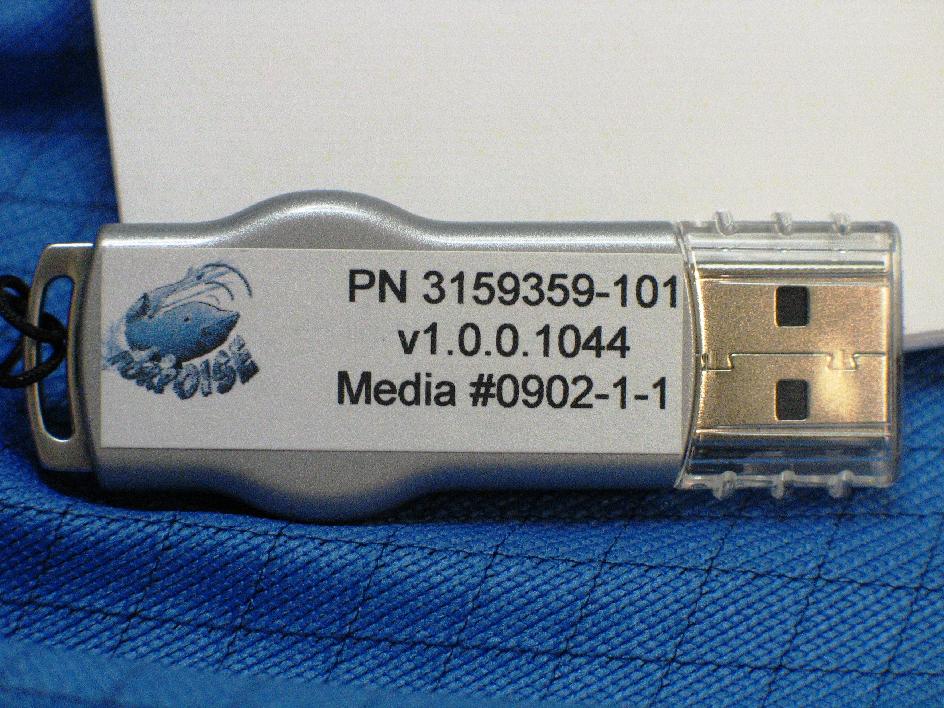
The Bureau has denied they do real time interception of phone conversations and text messages. But their honesty and openness on this overall topic has not been strictly open and direct with policymakers and the public.  In a published story, Harris Corporation does have equipment which allows for interception of phone conversations and text messages which they also promote. "Procurement documents indicate that the Stingray can also be used with software called“FishHawk,” (PDF) which boosts the device’s capabilities by allowing authorities to eavesdrop on conversations. Other similar Harris software includes “Porpoise,” which is sold on a USB drive and is designed to be installed on a laptop and used in conjunction with transceivers—possibly including the Stingray—for surveillance of text message."  (Meet the machines that steal your phone's data)

As some of you may know who may read recent posts, the Stingray is a device that is very portable  which emits signals to where your smart phones may be while you are in your home or going down the street and pairs up with the digital signals of your personal smart/cell phone.  And by magic the revelation of where you are is gotten by law enforcement.  But a negative that happens also is that innocent and law abiding individuals data is inhaled and the people do not know that.

So why is law enforcement particularly BCA so adamant about not having to get a search warrant to use the Stingray and get access to Minnesotans cell phone location?

(1) Law enforcement does not believe that Minnesotans should have the highest protection of the privacy from our Federal and State Constitutions, need for a search warrant under the 4th Amendment when they want access to your cell phone records or when surveillance is done on you in real time with such devices as Stingray.

(2) Law enforcement believes you have no expectation of privacy guaranteed by the 4th Amendment when records are held about your movements and associations by third parties such as Verizon and other communication carriers through the use of you cell/smart phone.

(3) Law enforcement does not want well-established body of case law that deals with search warrant and protects Minnesotans from intrusive behavior that compromises our liberty and privacy.

(4) Law enforcement wants to shield information about new technologies being used for surveillance purposes, therefore no search warrant.  As a recent Appeals Court in Florida found out.  Law enforcement "did not want to obtain a search warrant because they did not want to reveal information about the technology they used to track the cell phone signal."

(5) Law enforcement by having to do a search warrant must give to the independent judge specifics and particularities about "search and seizure" and how it interacts with privacy rights guaranteed by the Fourth Amendment.  In the context of cell phone surveillance, it would mean the particular cell phone they are following and shadowing and what information they want.  Not having specifics can be a difference between doing real time surveillance of a smart phone's location and trailing a phone's location for any time period.

A search warrant requirement is much more than just inserting the words probable cause.  A search warrant requires specificity and also allows a judge greater authority to supervise the execution of the warrant.  This is particularly important when law enforcement uses the Stingray/Kingfish and real time surveillance of individuals.  The use of technology and "tower dumps" allows for collection of innocent people's communication and location data.

For those concerned about what Minnesota law enforcement and other agencies might do with the data that your personal device in your pocket produces without Fourth Amendment protections, just think of the places you go to----the data can reveal an individuals associations and politics or as Justice Sotomayor stated people do not "expect that their movements will be recorded and aggregated in a manner that enables the Government to ascertain, more or less at will, their political and religious beliefs, sexual habits, and so on."

Minor differences of a court order based on probable cause with no mention of stating it is a search warrant in statute can be minor but can be constitutionally significant and also compromise an individuals Fourth Amendment privacy and liberty interests.